Before You Pledge Jewellery Understand How a Gold Loan Works
A gold loan allows a borrower to raise money by pledging eligible gold jewellery or ornaments with a lender. The loan amount is generally linked to the assessed value of the pledged gold, subject to the lender’s policies and applicable regulatory limits.
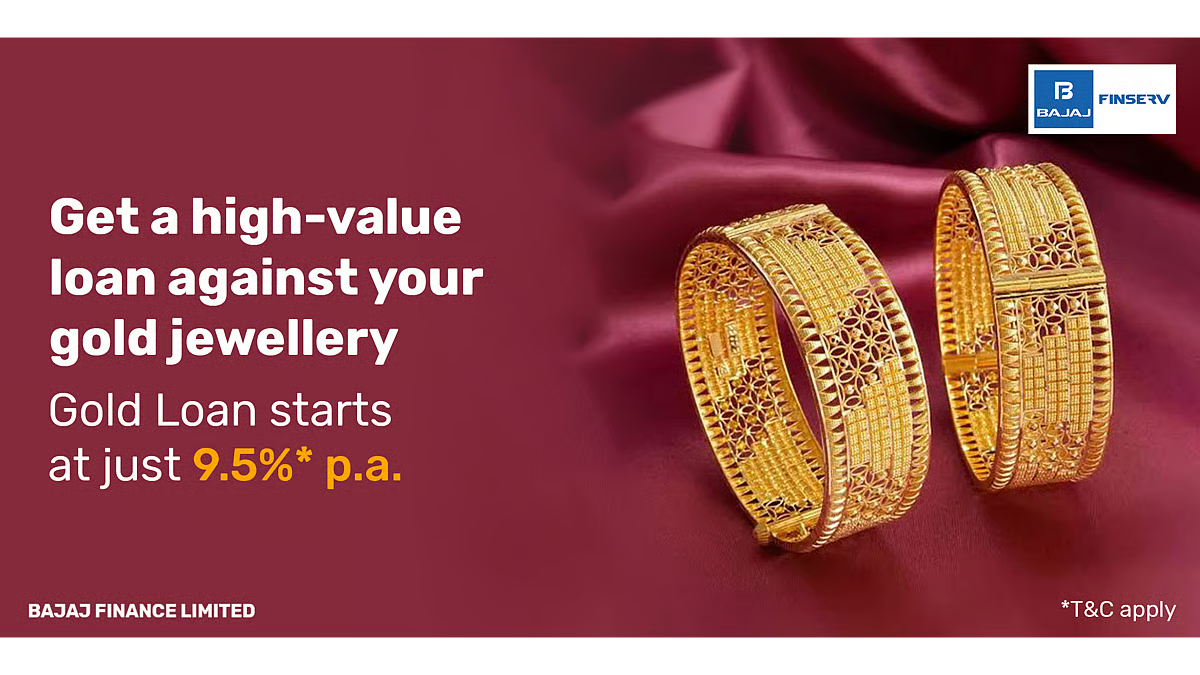
This type of borrowing can provide relatively quick access to funds because the lender holds the gold as collateral. However, convenience should not distract from the responsibilities involved. Borrowers need to understand valuation, interest, repayment terms, charges, auction risk, and the conditions under which the pledged gold is released.
A loan app may make the application process more convenient, but borrowers should still verify the lender, read the loan agreement, and understand the complete repayment obligation before pledging any jewellery.
Why People Consider Gold-Backed Borrowing
Gold is widely held in Indian households and may be available even when a borrower does not want to sell an investment or liquidate another asset.
A gold-backed loan may be considered for needs such as:
- Medical expenses
- Education payments
- Business working capital
- Temporary cash-flow gaps
- Household emergencies
- Repairs or urgent purchases
Because the borrowing is secured, lenders may evaluate the application differently from an unsecured personal loan.
The presence of collateral can make approval easier in some cases, but it does not mean the loan is risk-free.
If the borrower fails to repay according to the agreement, the lender may take steps to recover the dues using the pledged gold.
How the Gold Is Valued
The loan amount does not usually depend on the purchase price of the jewellery.
The lender assesses the eligible gold based on factors such as:
- Purity
- Net gold weight
- Prevailing market value
- Internal valuation process
- Applicable loan-to-value rules
Stones, decorative elements, and non-gold parts may not be included in the eligible weight.
This means a piece of jewellery that has a high retail purchase price may receive a lower collateral valuation.
Borrowers should ask how the net gold weight and purity are determined before accepting the loan amount.
Understanding Loan-to-Value
Loan-to-value, commonly called LTV, represents the proportion of the eligible gold value that the lender is willing to provide as a loan.
For example, if the eligible gold value is assessed at ₹1 lakh, the loan amount will generally be some percentage of that figure rather than the full ₹1 lakh.
A higher LTV can provide more borrowing capacity, but it also reduces the lender’s buffer if gold prices fall.
Borrowers should not automatically take the maximum amount available.
The loan should be based on the actual financial requirement and the borrower’s repayment capacity.
Purity Has a Direct Effect on Eligibility
Gold purity affects the assessed collateral value.
Jewellery with higher gold content may support a higher valuation than jewellery with lower purity, assuming similar weight.
The lender may use its own testing process to determine purity.
Borrowers should be present during the valuation where possible and should receive a clear record of the items deposited.
The record should ideally mention:
- Description of jewellery
- Quantity
- Gross weight
- Eligible net weight
- Purity assessment
- Loan reference details
This documentation becomes important when the gold is released after repayment.
Compare the Interest Rate Properly
The advertised rate may not always represent the complete cost.
Borrowers should check:
- Annual interest rate
- Whether the rate is fixed or variable
- How interest is calculated
- Whether interest is charged monthly
- Whether unpaid interest is added to the outstanding amount
- Penal interest for delayed payments
A low headline rate may apply only under specific conditions, such as a particular repayment plan or lower LTV.
Borrowers should ask for the total repayment illustration rather than relying only on the promotional rate.
Understand the Repayment Structure
Gold-backed borrowing can be offered under different repayment arrangements.
Regular EMI
The borrower pays principal and interest through scheduled instalments.
Interest-Only During Tenure
The borrower may pay interest periodically and repay the principal at the end.
Bullet Repayment
Principal and interest may be payable together at or near maturity, subject to the product structure.
The repayment method should match the borrower’s cash flow.
A structure that postpones most of the repayment until the end may look easier initially but can create a large maturity obligation.
Check the Loan Tenure
The tenure determines how long the loan remains active.
A shorter term may reduce total interest but require faster repayment.
A longer term may lower periodic pressure but increase the total interest cost.
Before selecting the tenure, borrowers should consider:
- Expected income
- Existing EMIs
- Business cash flow
- Upcoming expenses
- Ability to repay early
The borrower should know the exact maturity date and what happens if the loan is not cleared by then.
Review Processing and Other Charges
The interest rate is only one part of the borrowing cost.
Possible charges may include:
- Processing fee
- Valuation fee
- Documentation charges
- Renewal fee
- Penal charges
- Auction-related expenses
- Early closure charges where applicable
- Taxes
Borrowers should ask for a complete schedule of charges before signing the agreement.
A loan with a slightly lower interest rate may still be more expensive if other fees are high.
Ask How the Gold Will Be Stored
The pledged jewellery remains with the lender during the loan period.
Borrowers should understand:
- Where it is stored
- How the packet is sealed
- Whether the items are insured
- What identification is used
- How release is authorised
- What process applies if there is a dispute
The borrower should keep copies of the pledge receipt and loan agreement.
These documents should be preserved until the jewellery has been returned and verified.
Know the Consequences of Missing Payments
Delayed repayment can lead to more than additional interest.
Depending on the agreement, consequences may include:
- Penalty charges
- Additional interest
- Collection activity
- Loan classification changes
- Auction proceedings
The borrower should understand the lender’s notice process before signing.
If repayment difficulty appears likely, contacting the lender early may provide more options than ignoring reminders until the account becomes seriously overdue.
Auction Risk Is the Most Important Collateral Risk
The biggest practical risk is losing the pledged gold if dues remain unpaid.
The lender may have the right to auction the collateral after following the applicable contractual and regulatory process.
For many families, jewellery may have emotional value that is far greater than its market price.
This is why borrowers should avoid using irreplaceable pieces unless they are confident about repayment.
The maximum loan available should not be mistaken for the amount that is safe to borrow.
Compare Gold-Backed Borrowing With Other Options
Before pledging jewellery, borrowers may compare alternatives such as:
- Existing savings
- Emergency fund
- Salary advance
- Personal borrowing
- Secured credit against another asset
- Family support where appropriate
The right option depends on urgency, cost, repayment capacity, and the importance of preserving the pledged asset.
Gold-backed borrowing can be useful for short-term liquidity, but it should not become a repeated solution for ongoing monthly deficits.
Verify the Lender Carefully
Borrowers should verify the lender before submitting documents or handing over jewellery.
Check:
- Legal entity name
- Registered office
- Official website
- Customer care details
- Loan agreement
- Grievance process
- Regulatory registration where applicable
Avoid agents who ask borrowers to hand over jewellery without proper documentation.
Payments should be made only through official channels.
Loan-related documents should be downloaded or stored securely.
Do Not Share Sensitive Credentials
Borrowers should never share:
- Bank password
- UPI PIN
- Card PIN
- One-time passwords
- Remote device access
A legitimate loan process should not require the borrower to disclose these credentials to an employee or agent.
Unexpected calls claiming that the loan will be cancelled unless an OTP is shared should be treated with caution.
Check Prepayment Rules
Some borrowers may want to close the loan before maturity.
Before accepting the loan, ask:
- Is prepayment allowed?
- Is there a minimum holding period?
- Are foreclosure charges applicable?
- How is interest calculated up to closure?
- When will the gold be released?
Early repayment can reduce interest cost in some cases, but the exact benefit depends on the product terms.
The borrower should obtain a final closure statement before making the last payment.
Inspect the Jewellery at Release
After the loan is fully repaid, the lender should release the pledged items according to the agreed process.
Before leaving the branch or completing the handover, the borrower should verify:
- Number of items
- Description
- Weight where appropriate
- Physical condition
- Seal or packet reference
Any discrepancy should be reported immediately.
The loan closure receipt should also be retained for future reference.
Borrow Only for a Clear Purpose
A secured loan is still debt.
The loan amount should be linked to a specific need rather than taken simply because credit is available.
Borrowers should know:
- Exact amount required
- Expected repayment source
- Monthly or maturity obligation
- Backup plan if income is delayed
Borrowing repeatedly against jewellery to meet routine expenses can indicate a broader cash-flow problem.
Budget changes may be more sustainable than repeated secured borrowing.
When Digital Access Can Be Useful
A gold loan app may help borrowers check eligibility, request valuation, review outstanding balances, make repayments, or access account statements.
The digital interface should still show the lender’s legal identity, charges, repayment schedule, customer support, and grievance options clearly.
Convenience should support transparency rather than encourage borrowers to accept a loan before understanding the collateral risk.
Conclusion
A gold loan can provide access to funds without selling jewellery, but the borrower is placing a valuable asset at risk until the debt is fully repaid.
The most important checks are the gold valuation, LTV, interest rate, complete charges, repayment structure, tenure, storage process, auction terms, and release procedure.
Borrowers should take only the amount they genuinely need and choose a repayment plan that fits expected cash flow. Careful documentation and lender verification can also reduce avoidable disputes.
The key decision is not simply how much money the gold can unlock, but whether the borrower can repay comfortably enough to ensure the jewellery returns safely.